
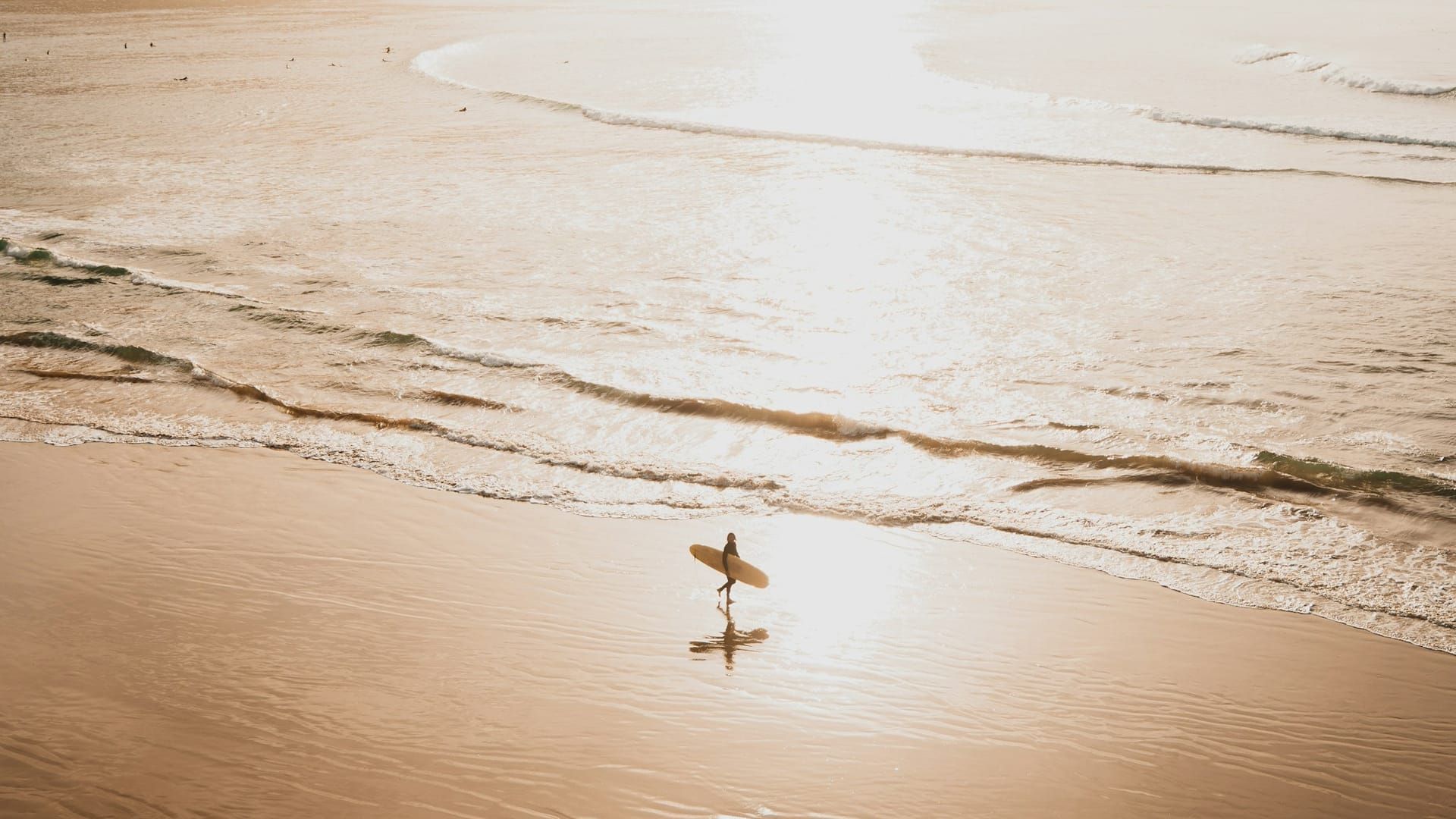
Three hours' flight from Paris, with water that rarely drops below 17°C and consistent Atlantic swells from October to April, Morocco has become Europe's winter surf destination. But “surfing in Morocco” covers very different realities: a sandy beach where you learn in the white water has nothing in common with a point break peeling over rock. The right spot depends first on your level, then on the season.
Two seasons, two kinds of surfer
From October to April, North Atlantic low-pressure systems send long, powerful swells: this is high season for experienced surfers, when the big spots around Agadir are fully working. From May to September, the swell eases, the water warms up (around 20 to 22°C in late summer) and the waves become smaller and more regular: ideal conditions for beginners or for getting back in the water after a long break.
Spring and autumn offer the best compromise: waves for every level, pleasant temperatures on land and fewer people on the well-known spots than in midwinter.
Beginners: Taghazout, Agadir and Imsouane Bay
Taghazout, about forty minutes north of Agadir airport, has the largest choice of surf schools and surf camps in the country. Beginners learn on wide sandy beaches such as Panoramas, riding the white water (waves that have already broken) before moving on to green waves. Instructors choose the day's spot according to the tide and the size of the swell, which is what matters most at this stage.
Imsouane Bay, about an hour's drive further north, is Morocco's other great classroom: a long, gentle wave sheltered from the strongest swell, so you can try again and again without wearing yourself out.
- Allow 5 to 7 days of lessons to stand up consistently and start choosing your waves.
- Go for morning sessions: the wind often picks up in the afternoon and spoils the waves.
- A good surf camp includes equipment, transport to the spot and proper coaching: check how many students there are per instructor.
Intermediates: learning to read a wave in Imsouane
Once you have mastered the take-off, Imsouane becomes the ideal place to progress. With a good swell, the bay's right-hander can peel for several hundred metres, one of the longest in Africa: enough to work on positioning, turns and reading the wave in a single session. Around Taghazout and Tamraght, spots such as Banana Point and Devil's Rock also offer punchier waves without the commitment of the big point breaks.
Experienced surfers: the point breaks of Agadir, Safi and Dakhla
In winter, experienced surfers come for the right-handers around Taghazout: Anchor Point, Killer Point and Boilers, which break over rocky reefs and demand real skill, as well as respect for priority at the peak in waters busy with local surfers.
Further north, Safi is famous for a hollow, powerful right-hander, reserved for very strong surfers when the swell is big. In the far south, Dakhla is best known as one of the world's top kitesurfing spots thanks to its 40-kilometre lagoon, but its Atlantic coast also offers quality waves far from any crowds, to combine with the desert and the silence of an extraordinary peninsula.
And Essaouira? The “wind city of Africa” is above all a kitesurfing and windsurfing destination: the wind blows hard for much of the year. For surfing, head to Sidi Kaouki, about thirty minutes further south.
Wetsuits and equipment
- October to April: a 4/3 mm wetsuit for early sessions, a 3/2 mm for most others (water around 17 to 18°C).
- May to September: a 3/2 mm or a shorty is enough, depending on how much you feel the cold.
- Mineral sunscreen, a rash vest and booties for the reef spots: the Moroccan sun is easy to underestimate in the water.
- Boards and wetsuits can be hired everywhere in Taghazout and Imsouane, so there is no need to travel with your own kit on a first trip.
Surfing or discovering Morocco? You don't have to choose
The mistake would be to come to Morocco and see nothing but the beach. A well-planned surf itinerary alternates sessions and sightseeing: two nights in Marrakech, the road to Essaouira and its UNESCO-listed medina, then along the coast to Imsouane and Taghazout, with a day in the hinterland behind Agadir around Paradise Valley. Driving times stay reasonable (about 2½ to 3 hours from Marrakech to Essaouira, then 2 hours from Essaouira to Imsouane) and Agadir airport lets you fly home without retracing your steps.
Our itinerary planner already knows Essaouira, Imsouane, Agadir and Dakhla: place your stops on the map and we take care of the rest, from accommodation close to the waves to lessons suited to your level and transfers. For a team, an introduction to surfing can also be built into a seminar in Essaouira or on the Agadir coast.
Fancy a tailor-made surf holiday? Request a personalised quote or discover our Morocco programmes.
Frequently Asked Questions
Where should beginners surf in Morocco?
In Taghazout (Panoramas beach) and Imsouane Bay, with a surf school: sandy beaches, gentle waves and coaching matched to the day's level.
What is the best season for surfing in Morocco?
October to April for the most consistent and powerful swells (experienced surfers); May to September for beginners, with smaller waves and warmer water.
Taghazout or Imsouane: which should I choose?
Taghazout has more spots, schools and nightlife; Imsouane is a quieter village whose long right-hander in the bay is ideal for improving.
Do I need a wetsuit to surf in Morocco?
Yes, all year round: a 4/3 or 3/2 mm in winter (water around 17 to 18°C), a 3/2 mm or a shorty in summer.